DESCRIPTION
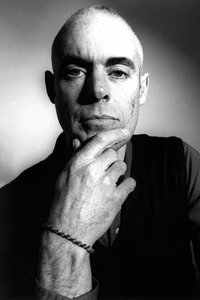
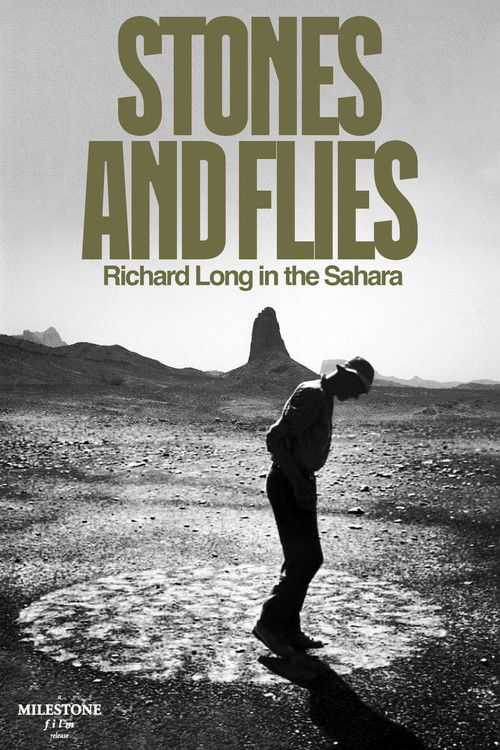
In the fall of 1987, Philippe Haas accompanied the sculptor Richard Long to the Algerian Sahara and filmed him tracing with his feet, or constructing with desert stones, simple geometric figures (straight lines, circles, spirals). In counterpoint to the images, Richard Long explains his approach. Since 1967, Richard Long (1945, Bristol), who belongs to the land art movement, has traveled the world on foot and installed, in places often inaccessible to the public, stones, sticks and driftwood found in situ. His ephemeral works are reproduced through photography. He thus made walking an art, and land art an aspiration of modern man for solitude in nature.
FULL CAST
Director Philip Haas and artist David Hockney invite you to join them on a magical journey through China via a marvelous 72-foot long 17th-century Chinese scroll entitled The Kangxi Emperor's Southern Inspection Tour (1691-1698), scroll seven . As Hockney unrolls the beautiful and minutely detailed work of art, he traces the Emperor Kangxi’s second tour of his southern empire in 1689.
Cyprien Tokoudagba is from the city of Abomey in the Benin Republic of West Africa, where he paints the religious houses of the vodun. Haas and his film crew follow Cyprien as he first paints and then takes part in the ceremony to open a new temple. The paintings include three vodun figures and several emblems, including a pipe and a duck. Cyprien explains his work in the context of the religion and takes the crew to film two other local ceremonies, one where the dead are believed to come back to instruct the living through wild dancing and, another, where women warriors perform their war dances.
‘Under the Weight of a Waking Dream’ is Zefier's debut swan song to the ending year. Comprised of poetry and endless enumerations is a diaristic film chronicling the lessons and contradictions found throughout the human experience.

Tom Hill, a Seneca artist and curator, explores the works of four contemporary Indigenous artists.
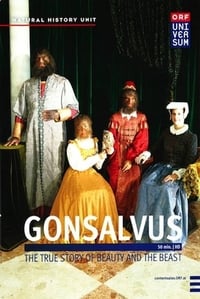
It's a condition known as "hypertrichosis" or "Ambras Syndrome," but in the 1500s it would transform one man into a national sensation and iconic fairy-tale character. His name: Petrus Gonsalvus, more commonly known today as the hairy hero of Beauty and the Beast.
The first mountains that the Amsterdam-based Colombian artist and filmmaker Ana Bravo Pérez saw in the Netherlands were black. In this experimental work, she follows the stench of the coal in the port of Amsterdam back to its origin: an open wound in northern Colombia. The mine is located in the territory of the Wayuu and has a huge impact on the indigenous people.
Heaven Adores You is an intimate, meditative inquiry into the life and music of Elliott Smith. By threading the music of Elliott Smith through the dense, yet often isolating landscapes of the three major cities he lived in -- Portland, New York City, Los Angeles -- Heaven Adores You presents a visual journey and an earnest review of the singer's prolific songwriting and the impact it continues to have on fans, friends, and fellow musicians.

This fascinating exploration of the creative process follows one of Australia's leading contemporary artists Ben Quilty, as he completes one of his most challenging art works.
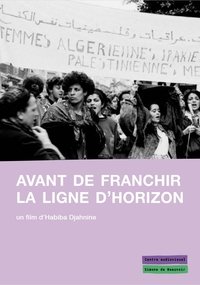
Habiba Djahnine went to meet activists who continue to take action. To meet them, to capture them in the spaces where they live, work or fight. They inscribe a few words of our tormented history. Memory, memory gaps, background noise, demonstrations... The film bears witness to 20 years of political mobilization/repression in Algeria.

A documentary short by Barbara Bingley-Verseman about the creation of a monumental outdoor mural by her twin sister, LA-based Kat Bing, and Parisian artist Kekli in the lead up to the Paris 2024 Olympics
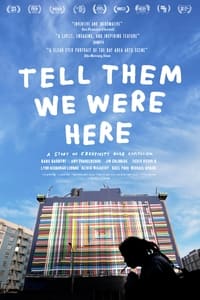
Tell Them We Were Here is an inspirational feature-length documentary about eight artists who show us why art is vital to a healthy society and reminds us that we are stronger together.
This film features some of the most important living Postmodern practitioners, Charles Jencks, Robert A M Stern and Sir Terry Farrell among them, and asks them how and why Postmodernism came about, and what it means to be Postmodern. This film was originally made for the V&A exhibition 'Postmodernism: Style and Subversion 1970 - 1990'.
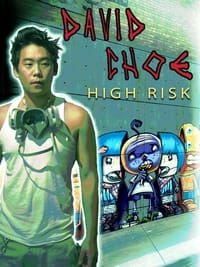
Artist David Choe has led a life of high risk, from hedonistic excesses to being imprisoned at a maximum security facility in a foreign country, and yet has been dramatically rewarded for his exploits. Life didn't change much when he traded a $60k fee in favor of stock in a start-up called The Facebook, but now he is estimated to be worth over $250 million, highlighting a colorful career filled with giant street art installations, porn star affairs and investigative reporting for companies like Vice and CNN. Director and childhood friend Harry Kim guides us through the fantastically surreal life of Choe featuring interviews and appearances by Kevin Smith, Eli Roth, Sasha Grey, Sean Parker, and Shepard Fairey.
This MGM Passing Parade series short takes a look at changing definitions of art in the United States.
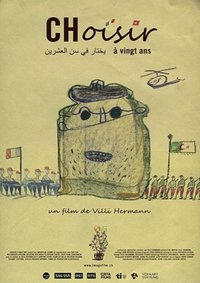
Between 1954-1962, one hundred to three hundred young French people refused to participate in the Algerian war. These rebels, soldiers or conscripts were non-violent or anti-colonialists. Some took refuge in Switzerland where Swiss citizens came to their aid, while in France they were condemned as traitors to the country. In 1962, a few months after Independence, Villi Hermann went to a region devastated by war near the Algerian-Moroccan border, to help rebuild a school. In 2016 he returned to Algeria and reunited with his former students. He also met French refractories, now living in France or Switzerland.
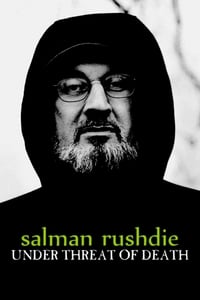
An intimate portrait, in his own words, of the Indian writer Salman Rushdie, author of The Satanic Verses (1988), thirty years after the fatwa uttered by the Iranian Ayatollah Khomeini: his youth in multicultural Bombay, his life in England, his many years of forced hiding, his thoughts on President Trump's United States of America.

For both Aboriginal and non-Aboriginal Australians, Captain James Cook is a figure of great historical significance.
An essay style film in the vein of Orson Welles' "F For Fake" and Jon Jost's "Speaking Directly". From 2011 to 2013, filmmaker Kristian Day randomly documented the art and actions of the award winning metal sculptor, James Bearden. Refusing to make another artist documentary, Day insisted on illustrating Bearden's creative process through surreal and id oriented story telling.
0 Comments