
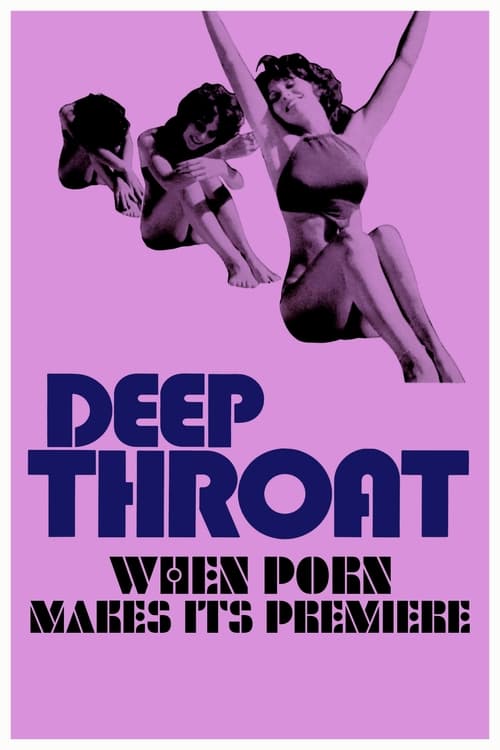
DESCRIPTION
Deep Throat, a pornographic film directed by Gerard Damiano, a film-loving hairdresser, and starring Linda Lovelace, a shy girl manipulated by a controlling husband, was released in 1972 and divided audiences, who began to talk openly about sex, desire and female pleasure; but also about violence and abuse; and about pornography, until then an almost clandestine industry, as a revolutionary cultural phenomenon.
FULL CAST
The story of the shooting of Satan's Blood (Escalofrío), a film directed by Carlos Puerto in 1978.

A city that has been living for two years with the law that prohibits "clandestine parties". A youth who, when reunited, risks receiving a police raid on their doorstep, in the street, in the park or in the square. Spatial segregation, denial of the right to the city and public space for the leisure of the poor, black and peripheral. Willingness to make art, create music, lyrics, poetry, beats, hits and spread culture in this repressive scenario.
Japan, 1954. A legend emerges from the ashes of Hiroshima and Nagasaki, devastated by atomic bombs in 1945. The creature's name is Godzilla. The film that tells its story is the first of kaiju eiga, the giant monster movies.

A documentary that chronicles the rise and decline of the black-owned ethnic beauty industry in America.
A young woman, who has inherited her grandparents' huge house, a fascinating place full of amazing objects, feels overwhelmed by the weight of memories and her new responsibilities. Fortunately, the former inhabitants of the house soon come to her aid. (An account of the life and work of Fernando Fernán Gómez [1921-2007] and his wife Emma Cohen [1946-2016], two singular artists and fundamental figures of contemporary Spanish culture.)

For three decades now, Qatar, this small desert kingdom, has not stopped being talked about; because of its financial power and the secrecy that surrounds it, the royal family that runs it fascinates as much as it frightens.


The film tells the story of the LGBTQIAP+ scene in Teresina and works as a rescue of street culture. In all, ten characters tell their stories through the screen , building the web that leads to a marginal and parallel reality. A rescue that comes from the 80s, through names like Samantha Menina, Monique Santos and many other important figures in this process.

The history of Frankenstein's journey from novel to stage to screen to icon.

In 1609, Henry IV sent Inquisition judge Pierre de Lancre to the French Basque Country to investigate witchcraft. In the trials, 80 people were sentenced to death at the stake. Between the 15th and 17th centuries, a total of between 40,000 and 60,000 people fell victim to such waves of persecution in Europe. How can this phenomenon be explained?
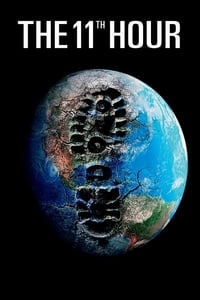
A look at the state of the global environment including visionary and practical solutions for restoring the planet's ecosystems. Featuring ongoing dialogues of experts from all over the world, including former Soviet Prime Minister Mikhail Gorbachev, renowned scientist Stephen Hawking, former head of the CIA R. James Woolse
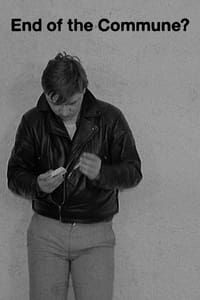
A documentary about Fassbinder and the early years of the legendary Antiteater, the group he was a member/leader of. You can here see and hear some of the actors he was going to use in his movies for the next years. The movie shows rehearsals for his play "The Coffeehouse," which also became a television movie, and you can watch unique footage from the 19th Film Festival in Berlin (1969) where "Love is Colder Than Death" was shown. As told in this documentary, his first feature movie was given a cold shoulder by many of the journalists and visitors at the festival. You can in "End of the Commune" watch Fassbinder and actor Ulli Lommel walk out on stage after the opening of "Love is Colder Than Death,” while a man in the audience is shouting "Out with the director!” In this documentary, Fassbinder also talks a lot about his father, who was a respectable doctor.


The follow-up film to “Barstow, California” takes us to the mountains of Miyama, a remote forest and tourist area north of Kyoto. Uwe Walter, a shakuhachi player from Germany, lives there with his wife Mitsuyo for 30 years. Together with the villagers he prepares the annual Gion Festival. On the eve of the festival, the village representatives tell him that his self-built studio is to be demolished. This brings back memories for him of earlier times and his first steps as a Nō actor. In the manner of a fresco, the film interweaves rural depictions of everyday life with the story of its German protagonist. In the village community with its togetherness of generations, Uwe shares life with his neighbours, with farmers, hunters, woodsmen, poultry farmers and anglers, tills his kitchen garden, and like other tradition-conscious villagers, he also grows his rice. The film shows them in a harsh mountain landscape between the rainy season and the first snow.
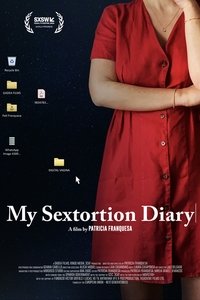
Pati, a young film producer, is fighting to carve out a professional career in the film industry. It is May 2019 when her laptop is stolen during a business trip in Madrid. Two months after, an anonymous Hacker accesses all the stored data in the stolen device and finds three very private photos of Pati. He threatens that if he doesn’t receive $2,400 he will mass-mail the pictures to all her work contacts in order to ruin her professional reputation. The shame, anger and distress caused by the ineffectiveness of the legal forces lead Pati to set out on her own investigation to stop the Hacker and regain control and power over her privacy.
0 Comments