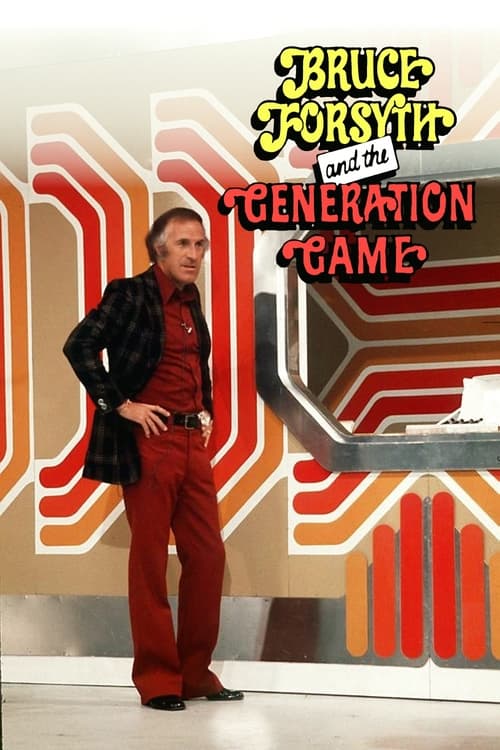
DESCRIPTION
The Generation Game was a British game show produced by the BBC in which four teams of two competed to win prizes. The programme was first broadcast in 1971 under the title Bruce Forsyth and the Generation Game and ran until 1982, and again from 1990 until 2002. The show was based on the Dutch TV show Een van de acht, "One of the Eight", the format devised in 1969 by Theo Uittenbogaard for VARA Television. Mrs. Mies Bouwman - a popular Dutch talk show host and presenter of the show - came up with the idea of the conveyor belt. She had seen it on a German programme and wanted to incorporate it into the show. Another antecedent for the gameshow was 'Sunday Night at the London Palladium' on ATV, which had a game called Beat the Clock, taken from an American gameshow. It featured married couples playing silly games within a certain time to win prize money. This was hosted by Bruce Forsyth from 1958, and he took the idea with him when he went over to the BBC.

How well do you really know your kids? In this game show hosted by Pierre Hébert, three sets of parents try to predict what their 6- to 8-year-old child will do when confronted with a range of unusual situations. The family with the most correct predictions goes on to the final round!

Could you pass off a complete stranger as your new best friend for one short weekend to win £10k, even if your 'friend' was actually a brilliant actor hell-bent on humiliating you?

Shooting Stars is a British television comedy panel game broadcast on BBC Two as a pilot in 1993, then as 3 full series from 1995 to 1997, then on BBC Choice from January to December 2002 with 2 series before returning to BBC Two for another 3 series from 2008 until its cancellation in 2011. Created and hosted by double-act Vic Reeves and Bob Mortimer, it uses the panel show format but with the comedians' often slapstick, surreal and anarchic humour does not rely on rules in order to function, with the pair apparently ignoring existing rules or inventing new ones as and when the mood takes them.
The show where everything's made up and the points don't matter. Not a talk show, not a sitcom, not a game show, Whose Line Is It Anyway? is a completely unique concept to network television. Four talented actors perform completely unrehearsed skits and games in front of a studio audience. Host Drew Carey sets the scene, with contributions from the audience, but the actors rely completely on their quick wit and improvisational skills. It's genuinely improvised, so anything can happen - and often does.
Hosted by India's biggest superstar, Amitabh Bachchan, one of the biggest shows is here to entertain millions, change lives and make dreams come true.
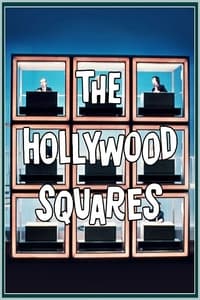
Hollywood Squares is an American panel game show, in which two contestants play tic-tac-toe to win cash and prizes. The "board" for the game is a 3 × 3 vertical stack of open-faced cubes, each occupied by a celebrity seated at a desk and facing the contestants. The stars are asked questions by the host, or "Square-Master", and the contestants judge the veracity of their answers in order to win the game. Although Hollywood Squares was a legitimate game show, the game largely acted as the background for the show's comedy in the form of joke answers, often given by the stars prior to their "real" answer. The show's writers usually supplied the jokes. In addition, the stars were given question subjects and plausible incorrect answers prior to the show. The show was scripted in this sense, but the gameplay was not. In any case, as host Peter Marshall, the best-known "Square-Master" and the man in whose honor the show's first announcer, Kenny Williams, actually "coined" the term, would explain at the beginning of the Secret Square game, the celebrities were briefed prior to show to help them with bluff answers, but they otherwise heard the actual questions for the first time as they were asked on air.

One hundred contestants in top physical shape compete in a series of grueling challenges to claim the honor — and cash reward — as the last one standing.
A game show set in a galaxy far, far away, which tests young contestants’ abilities in the core Jedi principles of strength, knowledge, and bravery as they face thrilling and fun obstacles in an attempt to achieve the rank of Jedi Knight

Adam Hills, one of Australia's favourite comedians and winner of Edinburgh's Best of the Fest award, is joined by two team captains, comedian and actor Alan Brough and radio breakfast announcer Myf Warhurst, as well as brave personalities who enjoy having long forgotten embarrassing stories laughed about on national television. Two teams go head to head as they sing, shout and delve deep into the recesses of their collective minds to help earn their team an extremely inglorious victory.
Bullseye was a popular British television programme. It was first made for the ITV network by ATV in 1981, then by Central from 1982 until 1995, and was hosted by Jim Bowen.
Comedy quiz show full of quirky facts, in which contestants are rewarded more if their answers are 'quite interesting'.
Alexander Armstrong and Richard Osman present a celebrity version of the general knowledge quiz in which contestants try to come up with the answers that nobody else could think of.
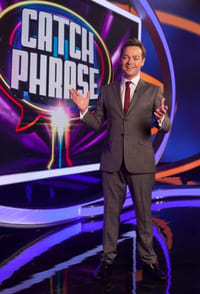
Stephen Mulhern hosts this remake of the 1980's game show where contestants have to guess a catchphrase based on animated picture clues. The puzzle is revealed one square at a time. It could be a book, a movie or a catch phrase. The winner with the most money can go on to win up to £50,000.

Boys and Girls was a British television gameshow broadcast in 2003 by Channel 4. The series was produced by Chris Evans through his company UMTV, and was presented by Vernon Kay. Evans only occasionally appeared on screen, usually as the driver of the golf buggy used to ferry the winning contestants off-set at the end of the show. Thus the show was one of the first Evans-produced shows not to feature Evans himself in a presenting role. Kay's co-presenter was Irish presenter and model Orla O'Rourke.
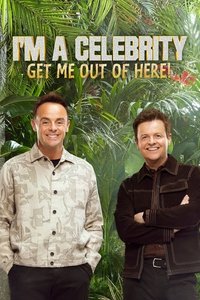
Twelve celebrities are abandoned in the Australian jungle. In order to earn food, they must perform Bushtucker Trials which challenge them physically and mentally.
Teen Big Brother was a United Kingdom spin off of the popular television programme Big Brother in which teenagers inhabited the house. The show was presented by Dermot O'Leary.
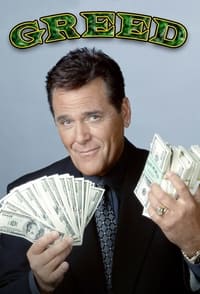
Greed is an American television game show that aired on Fox from November 4, 1999 until July 14, 2000. The game consisted of a team of contestants who answered a series of multiple-choice questions for a potential prize of up to $2 million. The show was hosted by Chuck Woolery, with Mark Thompson serving as announcer.

"Come on down!" The Price Is Right features a wide variety of games and contests with the same basic challenge: Guess the prices of everyday (or not-quite-everyday) retail items.
0 Comments