
DESCRIPTION
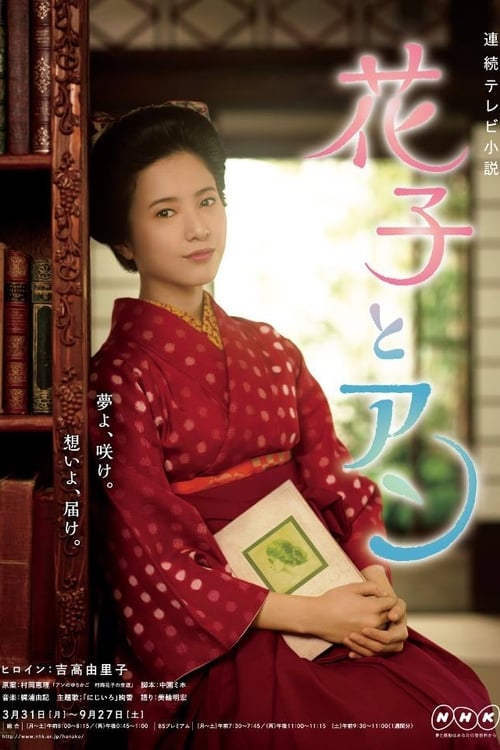
A Japanese girl from a poor family named Hanako went on an adventure to study in a girl's Christian school in Tokyo. She found her passion in English and step by step made her dream come true.

In the early Showa era, Japan’s first women’s law school opens, and the protagonist, Inotsume Tomoko (Ito Sairi), gains nationwide attention as one of the first female lawyers in the country. However, after facing wartime Japan’s harsh realities and losing everything, she becomes a judge with her legal knowledge and dedicates herself to establishing the family court. She stands passionately for the hardships that politics and economics cannot solve.
Born in 1937 in Osaka as the eldest daughter, Kawahara Kimiko moves to Shigaraki with her family at the age of 9. She works to support her family from a young age. Eventually, she jumps into the male world of pottery and becomes a pioneer of female ceramic arts. After marrying her husband who is also involved in ceramics and owning her own kiln, she raises her two children while struggling to create unique ware.

Aki Amano, a high-school girl from Tokyo moves to the Sanriku Coast in the Tohoku region to become a female diver. She becomes a local idol, then returns to Tokyo to try to become a real idol, and finally returns to Tohoku to help revitalize the area after the Great East Japan earthquake.

Suenaga Kokoro, an international flight attendant, lives with her mother and grandmother who operate a traditional restaurant in a lively downtown district of Tokyo where customs and traditions run deep and neighbors know each other like a big family.

The 97th NHK asadora is about Ten who becomes the first female comedian.

The story is about a young woman who becomes a landscape gardener following her father's wishes. Wakaba, born and brought up in Kobe, Hyogo Prefecture, lived happily with her parents and younger brother until the Great Hanshin Earthquake shook and destroyed the city in 1995. In the disaster, Wakaba loses her father, who was an architect and moves with her mother and brother to Obi, old castle town in Nichinan, Miyazaki Prefecture, where her grandmother lives with her uncle and aunt. Living in Obi's rich natural environment, Wakaba learns that plants can heal people's hearts. She makes a resolution to return to Kobe and reconstruct the city abundant in greenery.

Massan is based on the lives of Masataka Taketsuru and his wife Jessie Roberta "Rita" Cowan, a Scotswoman Taketsuru met while studying abroad.
In the early Showa era, the town of Choshi in Chiba Prefecture was divided by the conflicts between the worlds of "land" and "sea". Born to Kyubei Bando, the owner of a long-established soy sauce brewery, and his mistress Rui, Kaworu was taken in by her father and raised as a prim and proper lady. As she grew up, she fell in love with Sokichi, the eldest son of an established fisherman; alas, their two families were in conflict. This is a story of pure love between two people that grew beyond the boundaries of the old customs that they were brought up with. It is a drama that depicts their turbulent journey of love and the bonds of the people from an old and established family working tirelessly to protect their naturally brewed soy sauce business through the ups and downs.
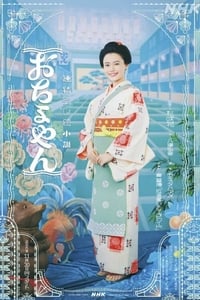
In the end of Meiji era, Takei Chiyo was born in a poor family in Osaka, and was sent to a theatre tea room as a servant when she was 9 years old. There, she was attracted by the world of theatre comedy. She grows up to be an actor and marries to Amami Ippei , but the war broke out and she was forced to stay away from acting for a while. However, when she comes back again, her acting in a radio drama impresses many people and makes herself one of the leading actors in western Japan.
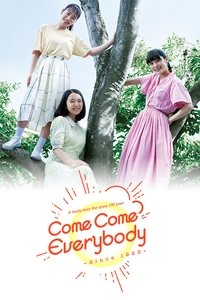
Come Come Everybody is a Japanese television drama series and the 105th NHK Asadora series, following Okaeri Mone.. It depicts the lives of three generations of women who have close links to the English lessons on radio which began in 1925.

Carnation is a Japanese television drama that aired in the Asadora slot on NHK from 3 October 2011 to 31 March 2012. It is the 85th Asadora. It is based on the life of the fashion designer Ayako Koshino in Kishiwada, Osaka. Ayako was the mother of the internationally famous designers Hiroko Koshino, Junko Koshino, and Michiko Koshino.

Ohisama is a Japanese television drama that aired on NHK in 2011 in the Asadora time slot. Set in Nagano prefecture, "Ohisama" covers the life of Yoko Sudo (Mao Inoue) through World War II. Yoko Sudo with her smile is able to bring brightness to those around her & she follows her mother's motif to laugh through the hard times. During the onset of WW II, Yoko is a high school student and "Ohisama" follows her as she eventually becomes a teacher and then gets married and has a child. Yoko then opens a soba restaurant with her student. --asianwiki
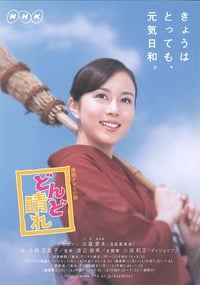
Natsumi is the 23 years old daughter of a master baker in Yokohama and in training with her father to become a pastry chef. She lives with her parents and younger brother in Yokohama. One day she travels to Iwate Prefecture with her boyfriend Masaki for his grandmother Katsuno's 77th birthday. While they are there, Katsuno, head okami of a famous ryokan in Morioka City, becomes ill and asks Masaki to return to run the ryokan. Natsumi returns to Yokohama and later Masaki visits, asking her to disregard their earlier plans to get married because he will return to Morioka as requested by Katsuno. However, Natsumi surprises him with a vow to become the ryokan's okami. Is Natsumi in for clear skies as suggested by the series name?
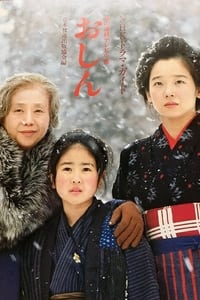
Oshin is a Japanese serialized morning television drama, which aired on broadcaster NHK from April 4, 1983 to March 31, 1984. The series follows the life of Shin Tanokura during the Meiji period up to the early 1980s. Shin was called "Oshin", which is an archaic Japanese cognomen.
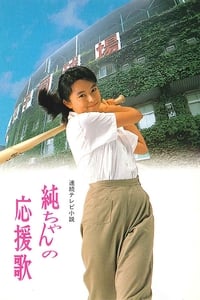
The year is 1947, August. Ono Junko's family is being evacuated to Wakayama and the father is going to war. A few years later, the father has returned from Manchuria but he also brought a boy that had been abandoned by his mother. The boy is Yuta and the family will adopt him.
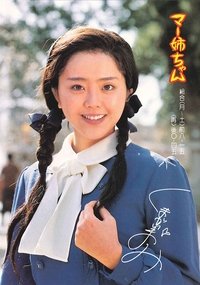
A serialized television series, aired in 1979, based on Hasegawa Machiko's "Sazae-san Uchiakebanashi" (Sazae-san Confessions), which depicts the true vibrant energy and strength of the common people, through their laughter and tears, from the pre-war to the post-war period in Japan.
0 Comments
