
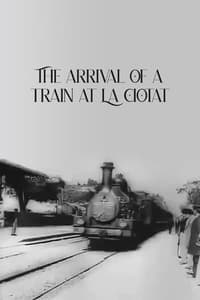
A group of people are standing along the platform of a railway station in La Ciotat, waiting for a train. One is seen coming, at some distance, and eventually stops at the platform. Doors of the railway-cars open and attendants help passengers off and on. Popular legend has it that, when this film was shown, the first-night audience fled the café in terror, fearing being run over by the "approaching" train. This legend has since been identified as promotional embellishment, though there is evidence to suggest that people were astounded at the capabilities of the Lumières' cinématographe.
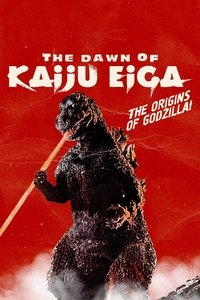
Japan, 1954. A legend emerges from the ashes of Hiroshima and Nagasaki, devastated by atomic bombs in 1945. The creature's name is Godzilla. The film that tells its story is the first of kaiju eiga, the giant monster movies.
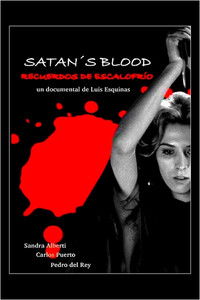
The story of the shooting of Satan's Blood (Escalofrío), a film directed by Carlos Puerto in 1978.

Six elderly retired women, two from Buenos Aires, Argentina; two from Montevideo, Uruguay; and two from Madrid, Spain, have something in common, despite their different interests and lives: they go to the movies almost every day.

Four lives that could not be more different and a single passion that unites them: the unconditional love for their cinemas, somewhere at the end of the world. Comrades in Dreams brings together six cinema makers from North Korea, America, India and Africa and follows their efforts to make their audiences dream every night.
The intricate history of UFA, a film production company founded in 1917 that has survived the Weimar Republic, the Nazi regime, the Adenauer era and the many and tumultuous events of contemporary Germany, and has always been the epicenter of the German film industry.
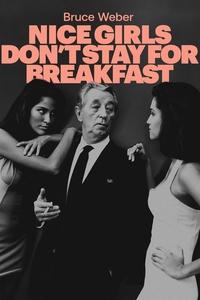
In the late 1990s, iconic photographer Bruce Weber barely managed to convince legendary actor Robert Mitchum (1917-97) to let himself be filmed simply hanging out with friends, telling anecdotes from his life and recording jazz standards.
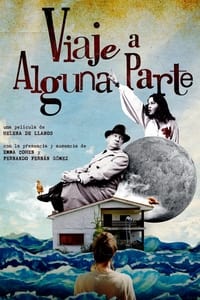
A young woman, who has inherited her grandparents' huge house, a fascinating place full of amazing objects, feels overwhelmed by the weight of memories and her new responsibilities. Fortunately, the former inhabitants of the house soon come to her aid. (An account of the life and work of Fernando Fernán Gómez [1921-2007] and his wife Emma Cohen [1946-2016], two singular artists and fundamental figures of contemporary Spanish culture.)
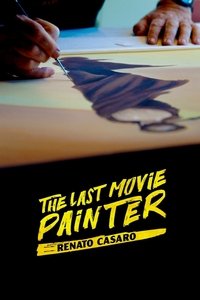
A fantastic journey through the world of Renato Casaro, one of the most important illustrators that the world’s film poster industry has ever known.

The story of the creation of The Spirit of the Beehive, a film directed by Víctor Erice in 1973.
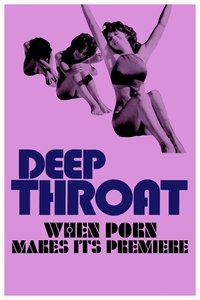
Deep Throat, a pornographic film directed by Gerard Damiano, a film-loving hairdresser, and starring Linda Lovelace, a shy girl manipulated by a controlling husband, was released in 1972 and divided audiences, who began to talk openly about sex, desire and female pleasure; but also about violence and abuse; and about pornography, until then an almost clandestine industry, as a revolutionary cultural phenomenon.
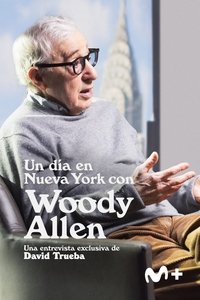
Spanish filmmaker David Trueba travels to New York to interview Woody Allen, who reviews his filmography and his many personal and artistic concerns.
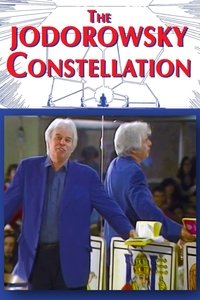
This documentary depicts the filmmaker Alejandro Jodorowsky talking about his life, his loves, his career as a filmmaker, graphic novelist, and workshop leader, and his eccentricities including tarot reader and theatrical director during The Panic Movement. Directed by Louis Mouchet, La Constellation Jodorowsky includes a lengthy on-camera interview with Jodorowsky in Spanish with subtitles. Marcel Marceau, Fernando Arrabal, Peter Gabriel, Jean "Moebius" Giraud, and Jean Pierre Vignau make appearances discussing their various projects with the director. In addition to the interview and film clips, Mouchet features some bizarre footage from Jodorowsky’s absurdist plays in which topless women splattered with paint writhe around the stage in a theatrical production meant to represent The Panic Movement, i.e., an artistic expression in which reason cannot fully express the human experience.
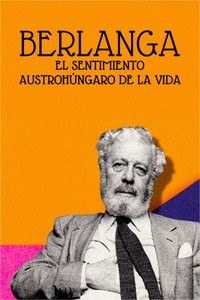
A journey through the life, work and many artistic miracles of the brilliant Spanish filmmaker Luis García Berlanga (1921-2010).
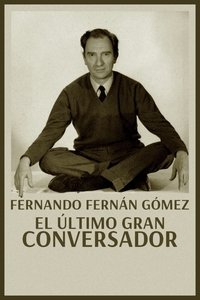
Fernando Fernán Gómez (1921-2007), actor, writer, playwright and film director, was for decades one of the most important figures in Spanish culture. His close friends and relatives reveal another facet in which he stood out above all: that of being an excellent conversationalist, capable of hypnotizing and seducing those who listened to him.
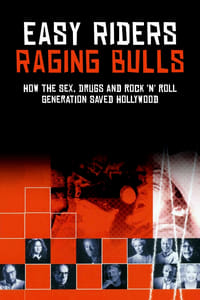
The chronicle of the mind-blowing journey that was Hollywood during the seventies; the true and gripping story of the last golden age of American cinema, an exalted celebration of creativity and experimentation; but also of sex, drugs and rock 'n' roll: a turbulent and dark tale of ambition, envy, betrayal, hatred and self-destruction.

Several high-budget epic films became Omar Sharif (1932-2015) a film star. He was an actor, but also a bridge player, a womanizer, a bon vivant; he was a man full of contradictions, who enjoyed card games more than movies; he was an eternal nomad who spent half his life in a hotel.
0 Comments

