DESCRIPTION
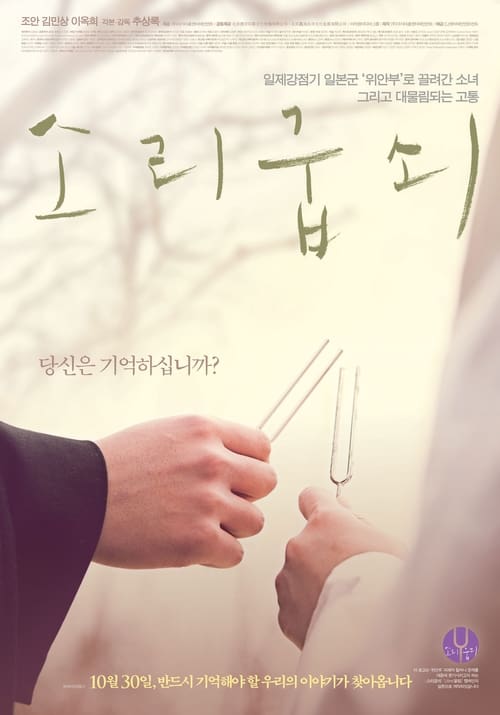
From the Japanese Occupation a 'comfort woman' returns from China an old woman. At the end of the war she can't return home and spends the next 65 years living as an alien in a foreign country. Even to her own granddaughter she seems to be losing her mind. She only wants to go back to Korea.
FULL CAST
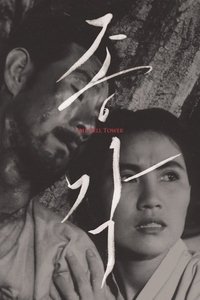
An elderly bell maker reminisces about his life filled with tragedy.
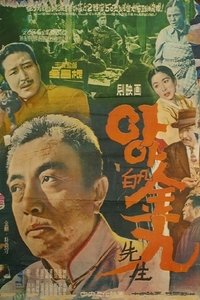
Kim Chang-su, who participated in the Donghak Movement, escapes to Manchuria after being chased by the Japanese army, finally making his way home. Angered by the assassination of Empress Myeong-seong, he murders a Japanese lieutenant and is sent to jail. He escapes from prison turns his focus on the democratic movement by teaching civilians and organizing Sinminheo (a democratic organization), even changing his name to 'Kim Gu.' After he is imprisoned again, he gets out on parole and goes to China, where he participates in establishing a provisional government from which he can direct the anti-Japanese struggle. Kim Gu goes on to play a part in Yun Bong-gil's deeds in Shanghai, the events at Hongkou Park, the encounter with Jiang Jish, and the establishment of the Korean National Army, and leads the struggle for Korea's independence with warm fraternal love and clear national spirit. When Korea is liberated in August 15, 1945, he returns back to his native land.

A grumpy old woman befriends a young civil servant and learns English from him. She then reveals to him her shocking past.
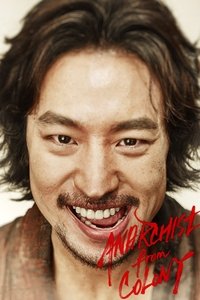
Based on the life of the Korean anarchist Park Yeol, the film shows his struggle to counter the massacre of Koreans by the government during the 1923 great Kanto earthquake, focusing on his activities as the leader of the anti-Japanese organization Bulryeongsa and his relationship with Japanese comrade Fumiko Kaneko.
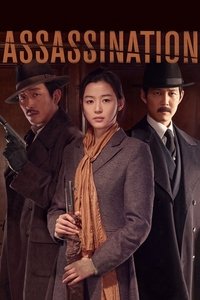
In Japanese-occupied Korea, three freedom fighters are assigned a mission to assassinate a genocidal military leader and his top collaborator. But the plan goes completely awry amidst double-crossings, counter-assassinations, and a shocking revelation about one of the assassins' past.
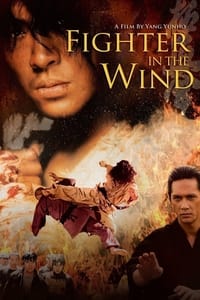
An account of karate competitor Choi Yeung-Eui who went to Japan after World War II to become a fighter pilot but found a very different path instead. He changed his name to Masutatsu Oyama and went across the country, defeating martial artists one after another. This film concentrates on the period when he is still young, and developing his famous karate style, Kyokushin.
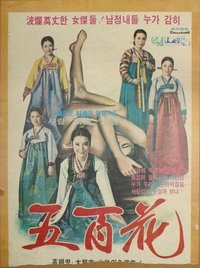
A patriot Park No-Hun is dispatched by Shanghai Provisional Government for Independence to assassinate members of the House of Council. In this situation Young-Kuk, brother of Hyeon-Ju who is a kisaeng of Myeong Wol Kwan, is jailed and Choi Chil-Yong, an inspector of Japanese Higher Police Department, is in agony of difficulties between Korea and Japan. Shin Yun-Il, a member of the council falls in love with a kisaeng whose name is Jeong-Mi. All of these are going their way under the influence of phases of the times such as carrying out colonial policies and each of them is linked complicatedly and causes troubles. After all their efforts concentrated on Independence of Korea, and Park No-Hun carried out his mission with help of 5 kisaengs of Myeong Wol Kwan. Finally he leaves for Shanghai with them.
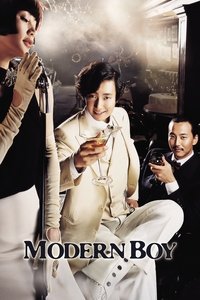
During the Japanese occupation, a Korean modern boy, who wants to fit in with the Japanese, falls in love with a Korean freedom fighter.
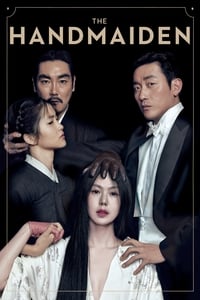
1930s Korea, in the period of Japanese occupation, a new girl, Sookee, is hired as a handmaiden to a Japanese heiress, Hideko, who lives a secluded life on a large countryside estate with her domineering Uncle Kouzuki. But the maid has a secret. She is a pickpocket recruited by a swindler posing as a Japanese Count to help him seduce the Lady to steal her fortune.
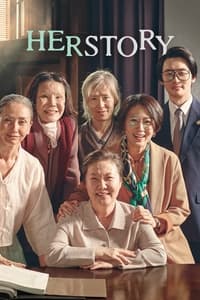
A true story of a six-year-long legal conflict of 10 comfort women and 13 attorneys against 200 Fukuoka supporters association.
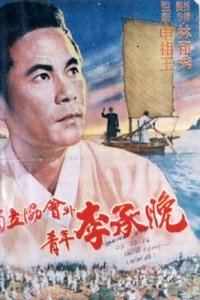
The life of Lee Seung-man, a freedom fighter who struggled to liberate Korea from Japanese rule.

A Japanese fine art teacher helps a Korean independence fighter to escape from a threat of being arrested by the Japanese police. The Korean man introduces him a gisaeng (Koran geisha) who learned Korean traditional court dance and he falls in love with her. However she hates Japanese because her parents were killed in the war.

Young Kim Chang-soo is placed behind bars, charged with murdering a Japanese person who took part in Empress Myeongseong's assassination. In prison, Kim Chang-soo sees how Koreans are persecuted and grows into a fighter for Korean independence.

In 1925 Korea, Japanese rulers demand the last remaining tiger be killed. The tiger easily defeats his pursuers until a legendary hunter takes him on.

A rousing tale of the Korean athletes who ran the 1947 Boston International Marathon, the first international marathon held since World War II.
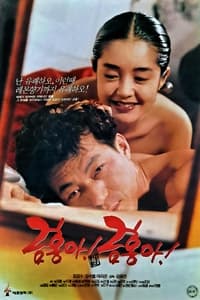
The story takes place during the period of Japanese Imperialism in Korea. It tells the tale of the life and loves of one peculiar poet. In 1932, Bon-wwong returned from studying fine arts in Japan. He is known as a painter of the Fauvism school of the Art. At the first successful exhibition of his works, he meets a young man, Lee Sang, a poet with really queer character. Soon Lee Sang and Bon-woong become close friends, and they meet almost every day and enjoy all kinds of interesting and usual events. Lee Sang goes to visit Bakchon (a health resort) for medical treatment. Bon-woong follow him. At Bakchon, Lee and Bon-woong meet Keum-hong (a famous waitress) and both fall in love with her. Lee loves Keum-hong physically, vulgarly, and indecently. On the contrary, Bon-woong loves her spiritually and platonically with respect. So, he can do nothing but watch the torrid love affair between Lee and Keum-hong.
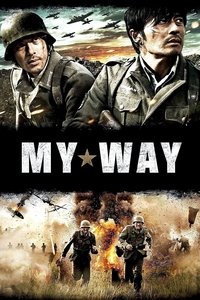
During the invasion of Normandy the photograph of a slim Korean man in German uniform was found. It transpired that the man had served as a soldier in the Japanese, Russian and German armies. His incredible story inspired director Kang Je-Gyu to create this epic war drama.
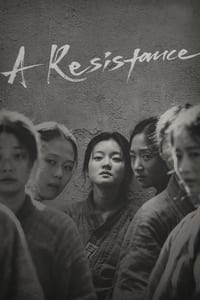
17-year-old Yu Gwan-Sun participates in the Korean independence movement. The country is under the rule of Japan, which annexed the country in 1910.
0 Comments