DESCRIPTION
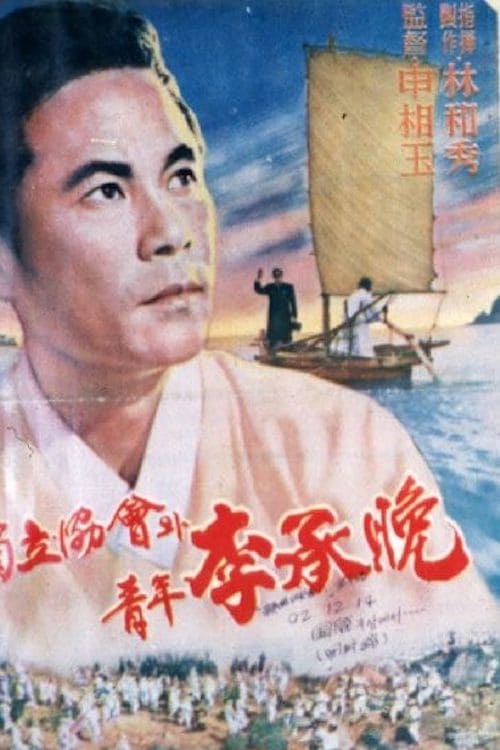
The life of Lee Seung-man, a freedom fighter who struggled to liberate Korea from Japanese rule.
Based on the life of the Korean anarchist Park Yeol, the film shows his struggle to counter the massacre of Koreans by the government during the 1923 great Kanto earthquake, focusing on his activities as the leader of the anti-Japanese organization Bulryeongsa and his relationship with Japanese comrade Fumiko Kaneko.
A teenage girl is captured by a giant mutated squid-like creature that appears from Seoul's Han River after toxic waste was dumped in it, prompting her family into a frantic search for her.
North Korea's 8th Special Forces hijack a shipment of CTX, a potent new liquid explosive, and threatens South Korea as part of a plot to re-unify the two countries. Ryu and Lee, special agents of O.P., South Korea's secret intelligence service, attempt to track down the terrorists and find the CTX. Meanwhile Hee, the 8th's ultra-bad female sniper, resurfaces to wreak havoc and haunt Ryu.

Agent Lam (Tony Leung) sets out to track a pair of plates used to make fake American dollars. When he discovers the plates, they are conned out of him by enigmatic US Embassy workers Owen (Richie Ren) and JJ (Shu Qi). With the trail now leading to Korea, Lam sets off in hot pursuit. There, amidst the dangerous and glamorous urban landscape of Seoul, Lam finds himself confronting an underworld crime boss known as the Polar Bear, head of the biggest counterfeiting organisation in Asia.
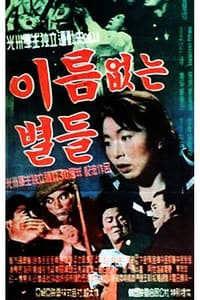
The son of a freedom fighter, Sang-hun is a member of an anti-Japanese resistance group called "Seongjinhoe," composed of students who share a dedication to the cause of liberation. Their spiritual guide is a teacher named Song Un-in. One day, Yeong-ae, whose brother is a detective in the Japanese police force charged with monitoring independence movements, joins their group. Following a series of sporadic incidents, the students gather one night to resolve on an uprising, but are discovered by the police. Young-ae is wrongfully accused of betraying their plans, but she risks her life in order to allow the group members to escape. The morning after, the students of Gwangju rise up against the Japanese government.
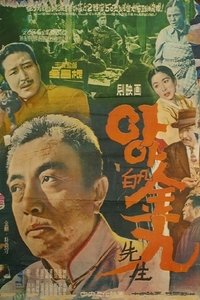
Kim Chang-su, who participated in the Donghak Movement, escapes to Manchuria after being chased by the Japanese army, finally making his way home. Angered by the assassination of Empress Myeong-seong, he murders a Japanese lieutenant and is sent to jail. He escapes from prison turns his focus on the democratic movement by teaching civilians and organizing Sinminheo (a democratic organization), even changing his name to 'Kim Gu.' After he is imprisoned again, he gets out on parole and goes to China, where he participates in establishing a provisional government from which he can direct the anti-Japanese struggle. Kim Gu goes on to play a part in Yun Bong-gil's deeds in Shanghai, the events at Hongkou Park, the encounter with Jiang Jish, and the establishment of the Korean National Army, and leads the struggle for Korea's independence with warm fraternal love and clear national spirit. When Korea is liberated in August 15, 1945, he returns back to his native land.
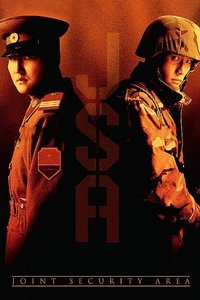
Two North Korean soldiers are killed in the border area between North and South Korea, prompting an investigation by a neutral body. The sergeant is the shooter, but the lead investigator, a Swiss-Korean woman, receives differing accounts from the two sides.
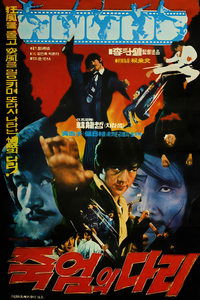
Park Cheol-ho, a Korean who stole Japanese military funds, is captured by Pang, a Chinese who captures independence fighters. Pang hands Park over to Japanese officer Akasaka, who tortures him to find out the location of the stolen military funds. When Park refuses to open up, Akasaka devises a plan to capture his younger sister, Yeong-ran.
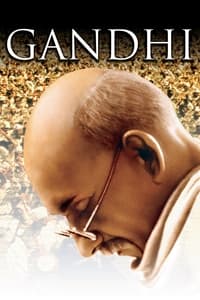
In the early years of the 20th century, Mohandas K. Gandhi, a British-trained lawyer, forsakes all worldly possessions to take up the cause of Indian independence. Faced with armed resistance from the British government, Gandhi adopts a policy of 'passive resistance', endeavouring to win freedom for his people without resorting to bloodshed.
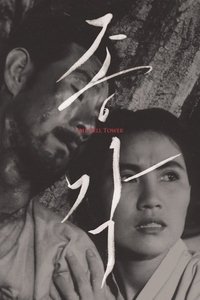
An elderly bell maker reminisces about his life filled with tragedy.
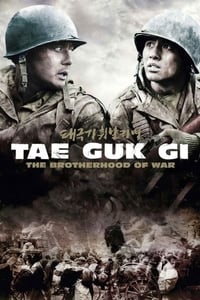
When two brothers are forced to fight in the Korean War, the elder decides to take the riskiest missions if it will help shield the younger from battle.
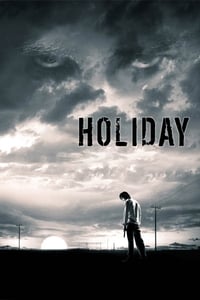
After 1988 Seoul Olympic, Ji Kang-heon, who is sentenced for 7 years, and other inmates escape from the police van. After escaping, Ji Kang-heon and inmates make the entire Seoul under fear while they hold hostages.
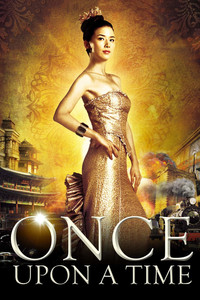
The film is a heist comedy set in 1940s Korea, and stars Park Yong-woo and Lee Bo-young as a con artist and jazz singer who each plot to steal a valuable diamond from the Japanese authorities.
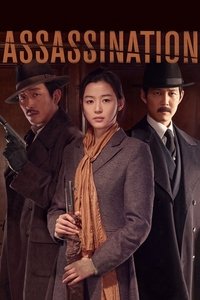
In Japanese-occupied Korea, three freedom fighters are assigned a mission to assassinate a genocidal military leader and his top collaborator. But the plan goes completely awry amidst double-crossings, counter-assassinations, and a shocking revelation about one of the assassins' past.
From the Japanese Occupation a 'comfort woman' returns from China an old woman. At the end of the war she can't return home and spends the next 65 years living as an alien in a foreign country. Even to her own granddaughter she seems to be losing her mind. She only wants to go back to Korea.
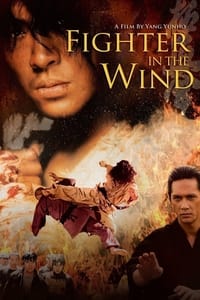
An account of karate competitor Choi Yeung-Eui who went to Japan after World War II to become a fighter pilot but found a very different path instead. He changed his name to Masutatsu Oyama and went across the country, defeating martial artists one after another. This film concentrates on the period when he is still young, and developing his famous karate style, Kyokushin.
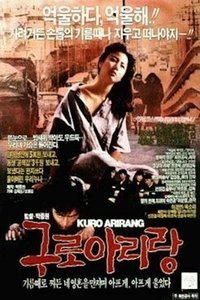
The film depicts the story of four people working in a sewing factory in Guro Industrial Complex in Seoul and the problems they face.
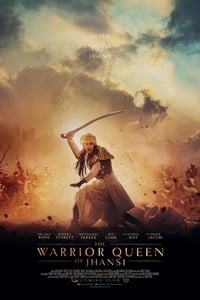
The Warrior Queen of Jhansi tells the true story of Lakshmibai, the historic Queen of Jhansi who fiercely led her army against the British East India Company in the mutiny of 1857. From Queen Elizabeth to Queen Victoria, two-and- a half-centuries of East India Company rule will be reversed by its attempt to crush India’s Warrior Queen. Lakshmibai is known as one of the most prominent figures within the independence movement of India. The passion to free her province from colonial rule led this young woman to become one of the greatest generals of the Indian army, and to go down in history for her bravery, strategic acumen, and as a force to reckon with by the East India Company and the British Raj. The Warrior Queen of Jhansi is the story of the woman who lived and fought for the freedom of her people.
0 Comments