
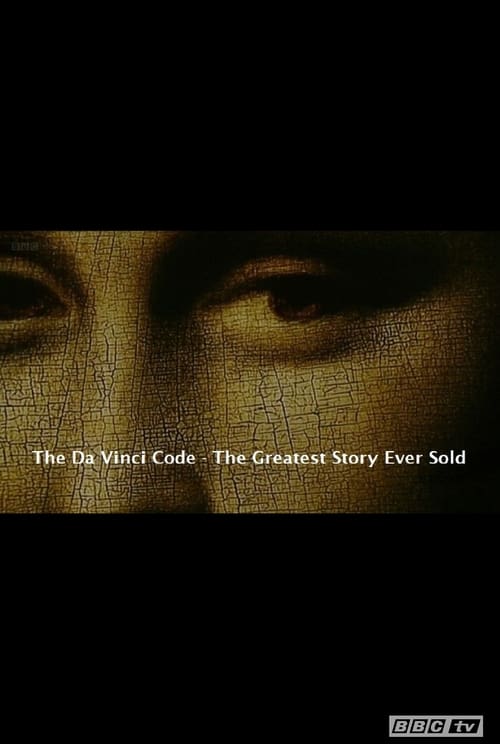
DESCRIPTION
After Dan Brown's publishing phenomenon The Da Vinci Code was cleared of plagiarism charges, this documentary explores the climate which has permitted a fictional story to make such an effective challenge to conventional history that it has forced a counter-attack from the Church, the art world and academics. Has Brown cracked the most difficult code of all our 21st-century cultural DNA?
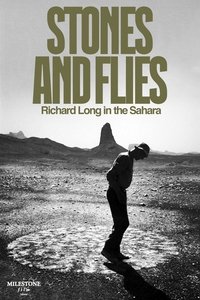
In the fall of 1987, Philippe Haas accompanied the sculptor Richard Long to the Algerian Sahara and filmed him tracing with his feet, or constructing with desert stones, simple geometric figures (straight lines, circles, spirals). In counterpoint to the images, Richard Long explains his approach. Since 1967, Richard Long (1945, Bristol), who belongs to the land art movement, has traveled the world on foot and installed, in places often inaccessible to the public, stones, sticks and driftwood found in situ. His ephemeral works are reproduced through photography. He thus made walking an art, and land art an aspiration of modern man for solitude in nature.

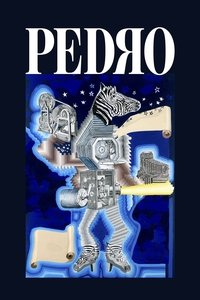
'Pedro', Liora Spilk's debut feature, paints a humorous and emotional portrait of Pedro Friedeberg, a Mexican plastic artist who became famous in the sixties for the creation of the hand chair. Between grumblings, ironies, reflections on art and disagreements, 'Pedro' achieves an endearing portrait of Friedeberg, and at the same time presents a tribute to friendship and creation.
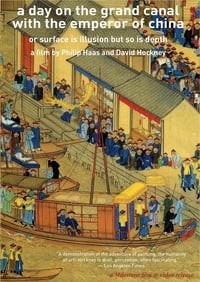
Director Philip Haas and artist David Hockney invite you to join them on a magical journey through China via a marvelous 72-foot long 17th-century Chinese scroll entitled The Kangxi Emperor's Southern Inspection Tour (1691-1698), scroll seven . As Hockney unrolls the beautiful and minutely detailed work of art, he traces the Emperor Kangxi’s second tour of his southern empire in 1689.
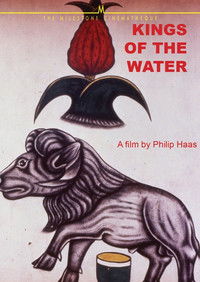
Cyprien Tokoudagba is from the city of Abomey in the Benin Republic of West Africa, where he paints the religious houses of the vodun. Haas and his film crew follow Cyprien as he first paints and then takes part in the ceremony to open a new temple. The paintings include three vodun figures and several emblems, including a pipe and a duck. Cyprien explains his work in the context of the religion and takes the crew to film two other local ceremonies, one where the dead are believed to come back to instruct the living through wild dancing and, another, where women warriors perform their war dances.
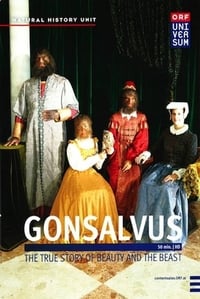
It's a condition known as "hypertrichosis" or "Ambras Syndrome," but in the 1500s it would transform one man into a national sensation and iconic fairy-tale character. His name: Petrus Gonsalvus, more commonly known today as the hairy hero of Beauty and the Beast.

Was the Brussels Innovation fire (1967) just a dramatic accident or was there more going on? Through exclusive interviews and edited archival material, a conspiracy theory is constructed in which the CIA and some property developers are assigned important roles. Despite the frivolous mysticism, there are many truths in this mockumentary!
Presents life in 18th century Spain as the painter Francisco de Goya showed it to us.
Arturo Urbiola, independent singer/songwriter, talks about the influence music has had on his life, it's impact, and what's in store for his artistic career after becoming a father.

Documentary about the Rembrandt Association. In the 19th century, a lot of Dutch art disappeared abroad, before the Rembrandt Association stood up in 1883 to put a stop to it. Today, 140 years later, the Association still helps determine what art lovers see in Dutch museums. In their crowning year, the Association faces a difficult choice: will they make the largest contribution in their history to the purchase of Rembrandt's De Vaandeldrager? The amount of 175 million needed for the painting is causing discussion. Is this money well spent?
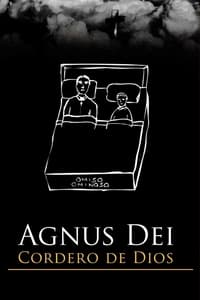
Jesús was sexually abused by a priest when he was 11 years old. As an adult, he decided not only to denounce his aggressor, but also to find him and confront him. This is a story that reveals the impunity of the Catholic Church for acts of pederasty committed by some of its members, while Jesús Romero offers the testimony of his life.
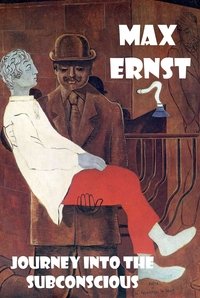
The inner world of the great painter Max Ernst is the subject of this film. One of the principal founders of Surrealism, Max Ernst explores the nature of materials and the emotional significance of shapes to combine with his collages and netherworld canvases. The director and Ernst together use the film creatively as a medium to explain the artist's own development.
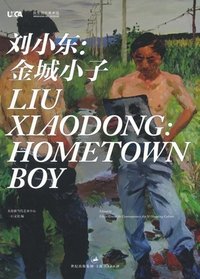
One of the best-known Chinese figurative painters, Liu Xiaodong goes back to his hometown of Jincheng, in the province of Liaoning (North-East China), to re-paint again friends and relatives after several years have gone by. With a soundtrack by famed composer Lim Giong (Millennium Mambo, The Assassin).
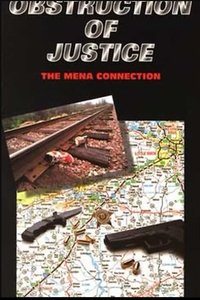
Two teenagers stumble upon a major drug smuggling operation. The boys are brutally murdered and their bodies placed on railroad tracks to give the appearance of a train accident. Soon, crime scene eyewitnesses vanish and investigations are shut down. The grieving parents are stunned. Corruption involving high level officials from Arkansas to Washington is documented in this incredible true life story. Why were numerous county, state and federal government investigations blocked? Why was a thirty month federal-grand-jury investigation abruptly shut down. Why did the FBI tell one boy's grieving parents, "You should accept the fact that a crime has not been committed?" This story of murder, drugs, corruption, and cover-ups, involves high ranking government officials, reaching up to the most powerful office in the world. It shows that interference from sinister political allies continues to protect these criminals from prosecution.


Dubai - the city of controversies. Six individuals go through personal insecurities, cultural pressures, money issues and the hustle of staying true to who they are. In the world that says otherwise. Is it all really worth it ? The film touches upon Arab identity, female role in the world, family values, Islam.
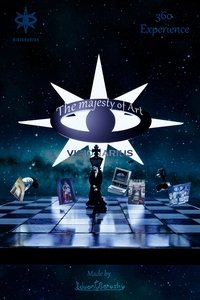
A movie about an artist that had a vision about art and he had expressed that in his paintings, designs, fashion designs and photography and make virtual reality exhibition and virtual reality artworks that people can enjoy and feel it.
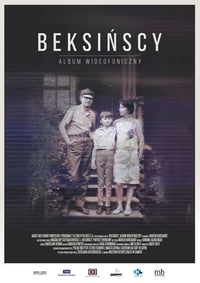
Painter Zdzisław Beksiński, his wife Zofia and their son Tomasz, a well-known radio journalist and translator, were a typical and unconventional family, both at the same time. One of the father’s obsessions was filming himself and his family members. Using archival footage only, shot primarily by Zdzisław, as well many other materials, which have not been presented anywhere so far, the film tells a tragic story of the Beksińskis that has never ceased to fascinate Polish filmmakers.
0 Comments
