


In this fun reality competition, online players try their best to flirt, bond and catfish their way to a R$300,000 prize.
Strike it Lucky was a popular British television game show from 29 October 1986 to 23 August 1999, originally produced by Thames Television for ITV, and presented by the British comedian Michael Barrymore. It was based on the American show of the same name that aired in 1986. In its formative years, it became well known for the outlandish and often highly eccentric contestants it featured - Barrymore would often spend over 5 minutes talking to them. The introductory footage of the prizes on offer were also noteworthy, often filmed in black-and-white with a slapstick style. In 1987, it was the fifth most watched programme on UK television. The Thames Television version of the show was recorded at Teddington Studios, and later Pinewood Studios. From 1996, the new version aired under the title Strike it Rich!; this being the title of the short-lived American game show Strike it Rich! on which it was based, and it moved to The London Studios. The reason for the name change was that the show was now being co-produced by LWT with Fremantle, so despite now being owned by the same company as Fremantle, Thames were unwilling to allow LWT use of the original title. There is also the factor that when the show was first exported to the UK, the Independent Broadcasting Authority's prize limits were still in place, and "Rich" was probably dropped from the title because of the relatively low value of prizes on offer; by the time it returned as Strike it Rich! the limits had been lifted and it was giving away a substantially higher value of prizes.

The clock is ticking as contestants compete in games of lexical dexterity and numerical agility.
Hosted by comedian Christopher Titus, the half-hour game show Pawnography features contestants competing against each other and the Pawn Stars—Rick Harrison, Corey Harrison and Austin “Chumlee” Russell—in three fast-paced rounds of trivia style questions to win money and coveted items from the World Famous Gold & Silver Pawnshop. Rick, Corey and Chumlee are featured in each episode vigorously defending their treasured items from confident and brainy contestants. The cherished items up for grabs are from Rick’s personal collection and he doesn’t want to give them up–this is the only game show that doesn’t want the contestants to win! Will a lucky contestant be able to stump the man who knows everything or will Rick prevail and walk away with his money in his pocket and his prized possessions intact?

Three teams of contestants go head-to-head in the daytime quiz show presented by Ranvir Singh. They answer questions to unlock a riddle set by the programme's Riddlemaster - Henry Lewis.
Final Offer is essentially a game show played without a studio audience present. In the hourlong series the "contestants" are sellers of antiques and rare collectibles who get an equally rare opportunity to haggle with four professional dealers -- Jacob Chait, Patrick Painter, Billy Roland and Jordan Tabach-Bank -- eager to outbid one another for the items. One on one, and in the order they choose, the sellers negotiate with the dealers, but there's a catch: Once a seller passes on an offer, there's no turning back. He or she begins the process again with the next buyer in line, hoping the bid they receive is at least as high as the one they just turned down. Let the high-stakes game, in which the highest bidder doesn't always win, begin.

Games World was an entertainment video games show that was broadcast on Sky One each weekday from 1 March 1993–2 October 1998. The overall concept of Games World was similar to GamesMaster.

A game show based on the Carmen Sandiego computer game series created by Brøderbund Software.

We asked 100 game show-loving Canadians: Name the only iconic TV show featuring two Canadian families competing to guess popular answers to fun survey questions. Top answer on the board? Survey says...get ready for Family Feud Canada!

Maze Master Adam Conover takes families on an adventure of a lifetime across themed zones for physical and mental games that earn crystals in return for time in the exciting Crystal Dome and a chance to win the $25,000 grand prize!

Singing competition in which celebrities face off against one another while shrouded from head to toe in an elaborate costumes, concealing their identities.
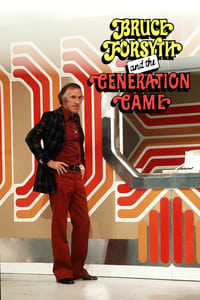
The Generation Game was a British game show produced by the BBC in which four teams of two competed to win prizes. The programme was first broadcast in 1971 under the title Bruce Forsyth and the Generation Game and ran until 1982, and again from 1990 until 2002. The show was based on the Dutch TV show Een van de acht, "One of the Eight", the format devised in 1969 by Theo Uittenbogaard for VARA Television. Mrs. Mies Bouwman - a popular Dutch talk show host and presenter of the show - came up with the idea of the conveyor belt. She had seen it on a German programme and wanted to incorporate it into the show. Another antecedent for the gameshow was 'Sunday Night at the London Palladium' on ATV, which had a game called Beat the Clock, taken from an American gameshow. It featured married couples playing silly games within a certain time to win prize money. This was hosted by Bruce Forsyth from 1958, and he took the idea with him when he went over to the BBC.
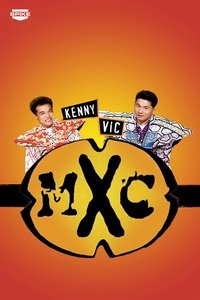
Footage from the popular game show, Takeshi's Castle has been re-edited, re-written and re-voiced into a hilarious, intentionally over-produced, modern "action/X-treme" sports show.
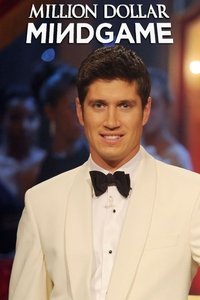
In this game of reasoning and smarts, teams comprised of six people who all know each other – co-workers, friends, teammates, etc. – will need to tackle a series of logic-based questions. The more questions the team answers correctly, the more money they will earn towards a grand prize, potentially earning them $1 million.


Rooster Teeth Productions' official weekly game show that pits two Rooster Teeth teams against each other and “on the spot” to earn points.
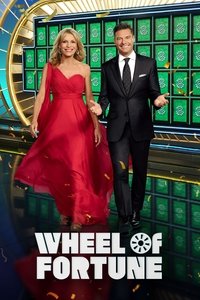
This game show sees contestants solve word puzzles, similar to those used in Hangman, to win cash and prizes determined by spinning a giant carnival wheel.
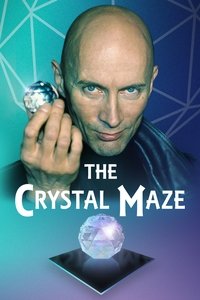
The Crystal Maze was a British game show, produced by Chatsworth Television and shown on Channel 4 in the United Kingdom between 15 February 1990 and 10 August 1995. The series is set in "The Crystal Maze", which features four different "zones" set in various periods of time and space. A team of six contestants take part in a series of challenges in order to win "time crystals". Each crystal gives the team five seconds of time inside "The Crystal Dome", the centrepiece of the maze where the contestants take part in their final challenge.
0 Comments